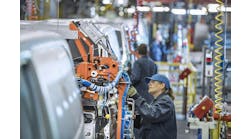
Business Analytics Still in Infancy Stage in Manufacturing

Business analytics might offer a tantalizing future, but industries seem to be struggling with how to utilize the technology in innovative ways.

Manufacturing, in particular, seems to be tailor-made to take advantage of business analytics, as more and more of its operations rely on the comprehension of data, such as enterprise and production software, sensor findings and electronic transactions.

While producers of industrial goods use a variety of analytics, manufacturers have not yet automated many of the underlying data integration and analytics operations needed to generate mature results, according to new benchmark research from Ventana Research.

Among the findings was 63 percent of the 2,600 participants polled use analytics spreadsheets, which are more laborious and prone to error. Only 12 percent of all manufacturing companies function at what Ventana Research would rank as a high level of maturity in their use of analytics.

Part of the problem is that companies don't devote resources toward collecting and tracking information from a wide array of sources, says Robert Kugel, senior vice president of research at Ventana Research.

"The management of data tends to be an afterthought in most organizations," says Kugel. "No one usually has responsibility over it, and people only grudgingly pay attention to it. The first step is to understand that managing data is a full-time responsibility. One of the things missing in a majority of companies is the ability to pull data easily from different parts of the organization from different types of systems."

The most important categories of metrics within manufacturing are financial (identified by 68 percent of participants), cost (67 percent) and operational (57 percent). However, priorities varied by line of business: Financial metrics rank first among those in finance or business, while sales metrics rank highest among those in marketing, sales and product areas. Cost metrics rank the highest across lines of business, while executives are more likely to favor financial and profitability as well as cost metrics.

According to the study, issues arise in providing current metrics and KPIs within organizations. Forty-seven percent of those polled take longer than a week to process the data. There is also doubt about the accuracy of the numbers, as 59 percent said the data they use for business analytics is only somewhat accurate.

"We found that across the board, for big companies, little companies, for manufacturing companies, for finance departments," says Kugel. "It was stunning."

Likewise, a common struggle within organizations is that they might take a surface approach to improving their use of business analytics. According to the research, companies have to examine each line of business and its needs, which could vary from finance, to human resources to the supply chain, production or marketing and sales. While each will have different needs, if instituted with care and organization, analytics can support improvement in areas of people, processes, information and technology.

Analytics are not widely available when people need them, the study finds. Only one-third of senior executives and one-fourth of vice presidents, directors and managers have them always available.

Manufacturing faces some significant obstacles in being able to take best advantage of business analytics, say Ventana Research, because of a lack of resources, a strong business case and of the general awareness of the need to change, accounting for more than 40 percent of those surveyed.

To overcome those fundamental barriers will require all the players involved in organization to understand the business case for investing in an initiative and then choosing the right tools to help deliver them.

"Business analytics can give any manufacturing company, regardless of size, a market edge" says Kugel. "Whether it's a result of getting a clearer picture of operations, better insight into market demand, faster alerts when individual products are tracking above or below forecast or some combination of all of these, companies can use analytics enhance their competitiveness. Without a focused approach to business analytics, they simply won't be able to have the agility to operate in today's economy or have the kind of understanding needed to optimize performance."

Discuss this Article 0

Post new comment
Sign In or register to use your Business Finance ID
(optional)

Newsletter Signup

BF Marketplace - Buy a Link Now